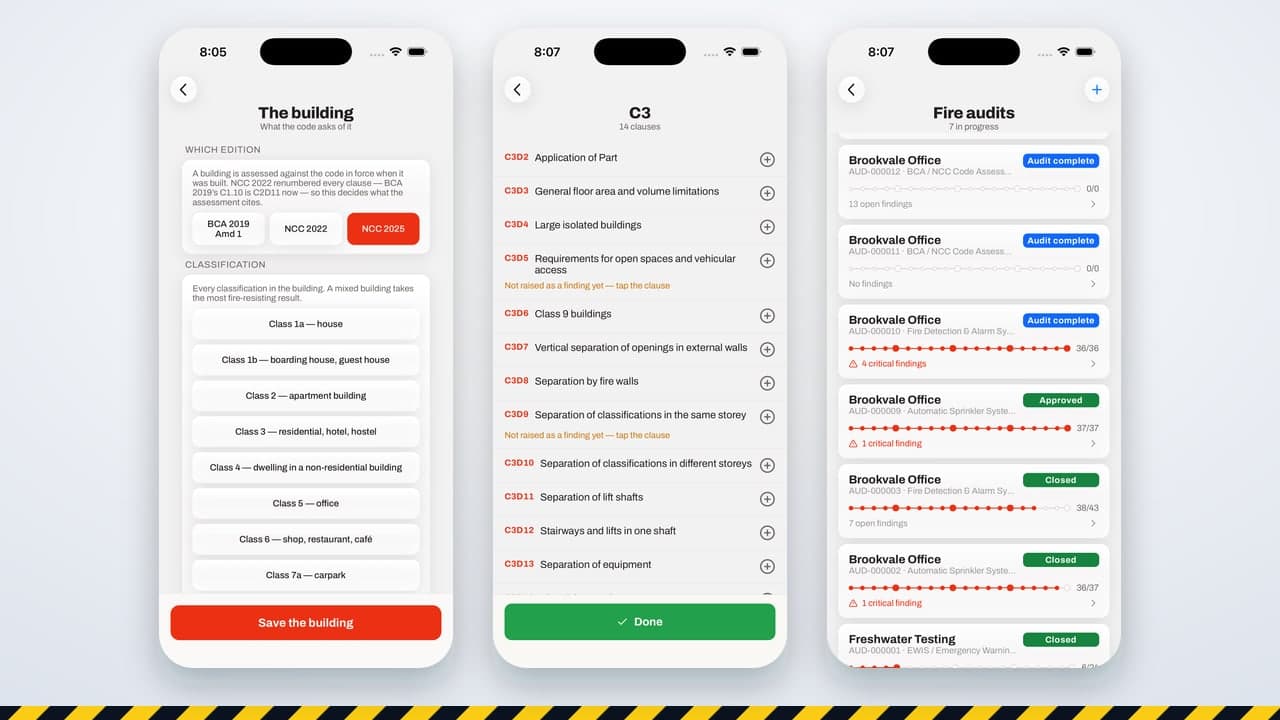
Routine servicing asks whether each piece of equipment works. A fire safety audit asks a bigger question: does this building have the fire safety measures it should, are they in the right condition, and does the building meet the code it was built to? Audits feed annual statements, upgrade work and remedial quotes, and they are usually still done on paper and written up at night.
Fire safety audit software moves the audit onto a phone or tablet and keeps every finding moving after the auditor leaves. This guide covers the three kinds of audit most Australian fire contractors run, and what the software should do for each.
1. Checklist audits
The simplest audit walks a building system by system against a checklist: detection and alarm, sprinklers, hydrants, exits, emergency lighting. Software should let the auditor answer each question, attach photos, drop findings on the floor plan, and finish with a report that does not need retyping.
2. Passive fire registers
Passive fire protection, the fire doors, penetration seals, dampers, walls and joints that hold a fire in place, is often the least documented part of a building. A passive fire audit builds a register of each element: where it is, its fire resistance level, its tag, the system and substrate, and whether it passes. Good software keeps that register on the site’s asset register rather than inside a one-off report, so the next inspection starts from it.
3. Code assessments
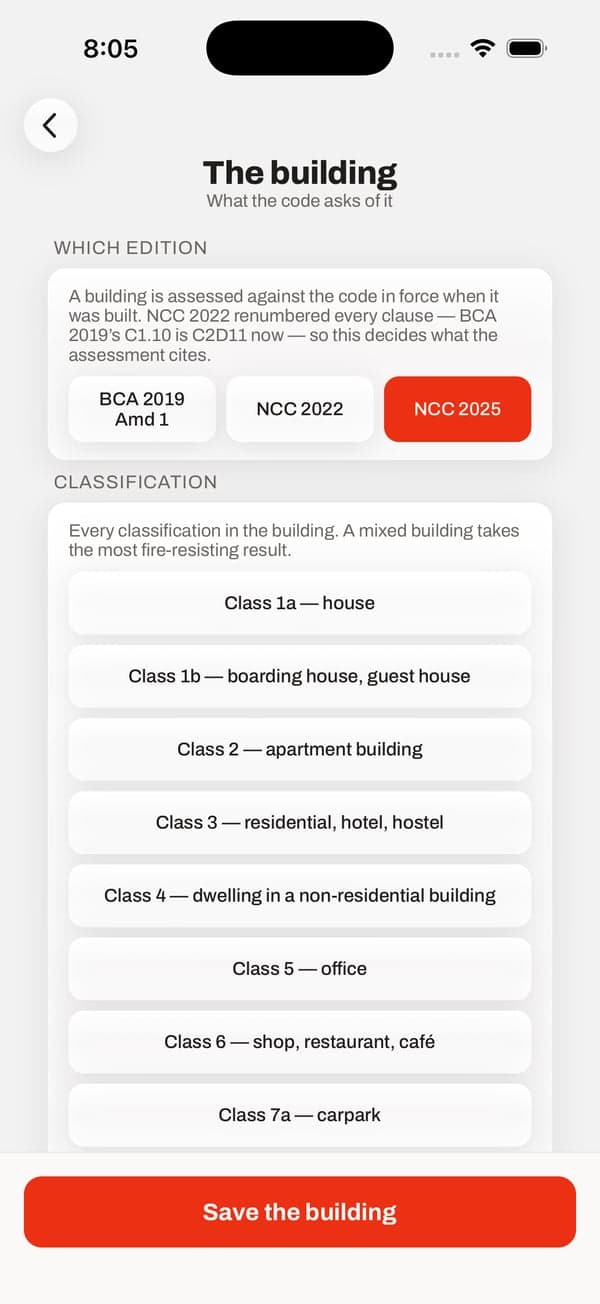
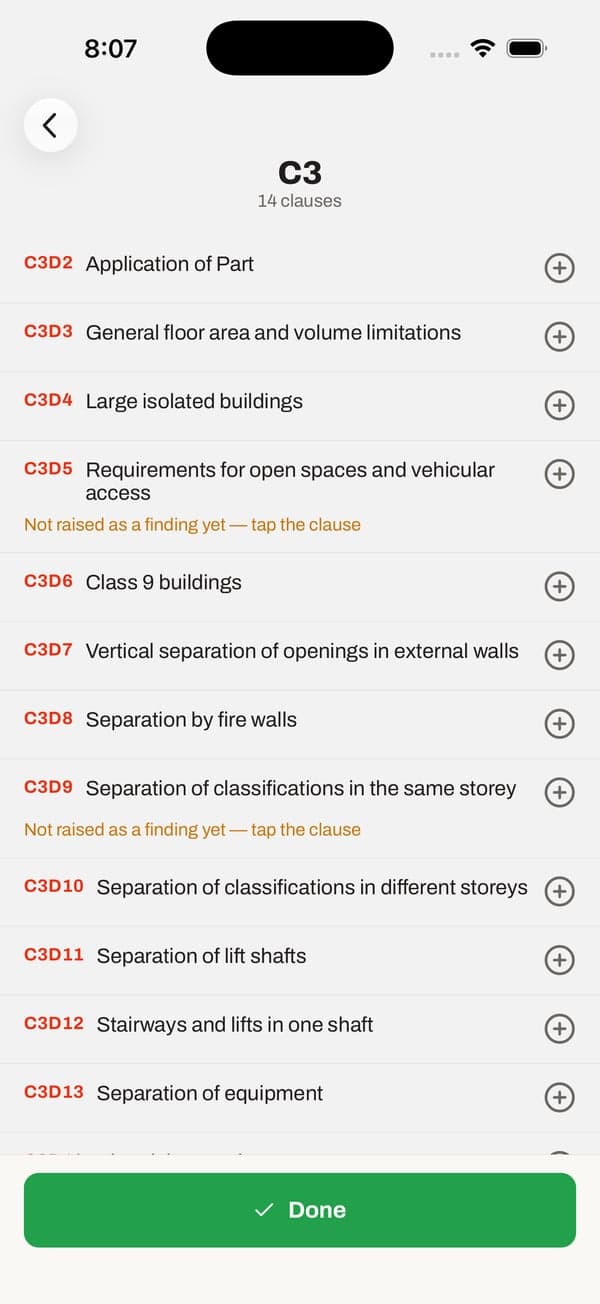
A code assessment checks the building against the National Construction Code edition it was built under. The auditor sets the edition (BCA 2019, NCC 2022 or NCC 2025) and the building’s classifications, then works through the relevant Parts clause by clause. Software helps most where the code is mechanical:
- Working out which fire safety systems the building should have, from its classes, size and use, and comparing that with what the auditor finds.
- Checking measured values, such as exit widths and travel distances, against the limits for the building’s class.
- Citing clauses correctly for the edition, including state variations.
- Producing a fire safety schedule in the form your state uses, where it has one.
Findings that do not stop at the report
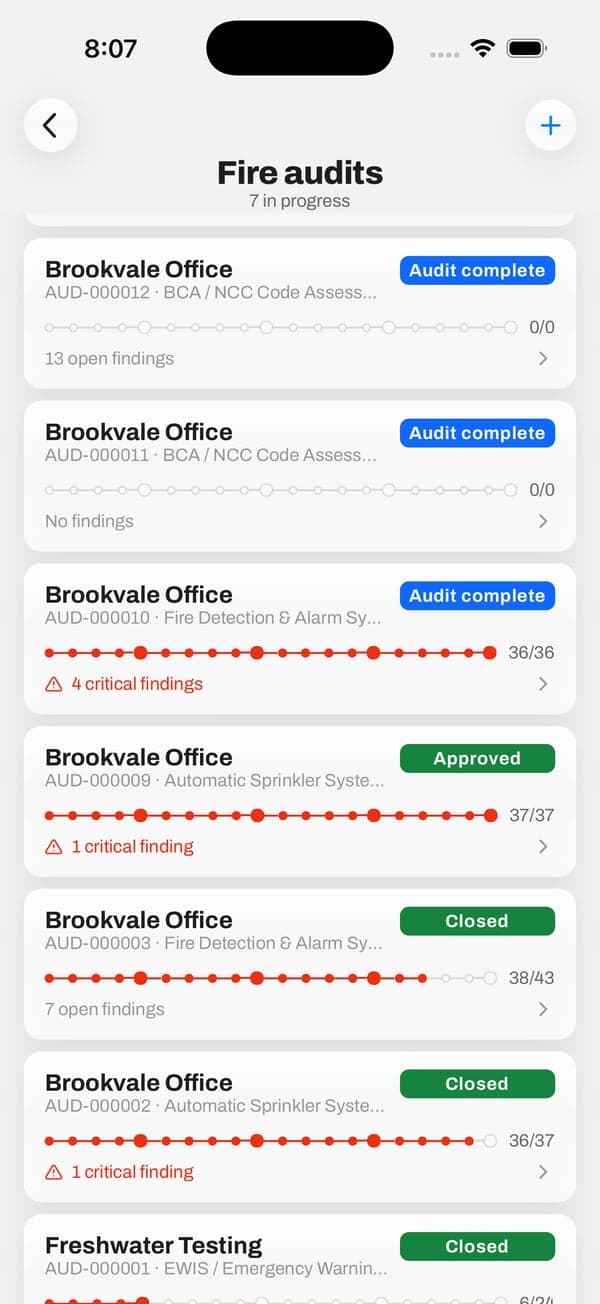
An audit is only as good as what happens to its findings. Each one should move through quoting, approval, rectification and verification, and move automatically when the quote is approved or the job is done. An open critical finding should hold up the building’s annual statement until it is fixed, so nobody signs a statement over a known problem. Clients should see each finding and its progress in a portal.
What to look for in fire safety audit software
- Checklist, passive fire and code assessment audits in one app.
- Offline use on site, with photos and floor plan pins.
- NCC editions and building classes, with clauses cited for the edition.
- Required systems compared with what was found.
- Measured checks against the code’s limits.
- A passive fire register that lives on the site’s assets.
- Findings tracked through quote, fix and verification, linked to statement readiness.
- Reports in your branding, and a portal for the client.
Frequently asked questions
What is fire safety audit software?
Software for assessing a building’s fire safety on site, on a phone or tablet: checklist audits, passive fire registers and code assessments, with findings, photos and reports, and the findings tracked through to rectification.
Which NCC editions should audit software support?
Buildings are assessed against the code in force when they were built, so software should support the editions you meet in practice, such as BCA 2019, NCC 2022 and NCC 2025, and cite clauses for the right one.
Is a passive fire audit different from AS 1851 servicing?
Yes. AS 1851 covers routine servicing of fire doors and other equipment, while a passive fire audit records and assesses every passive element in the building, including penetrations and seals that routine servicing does not touch.
Can audit findings affect the annual statement?
They should. In traqR, an open critical finding counts against statement readiness for NSW, Victorian and Queensland statements until it is fixed.