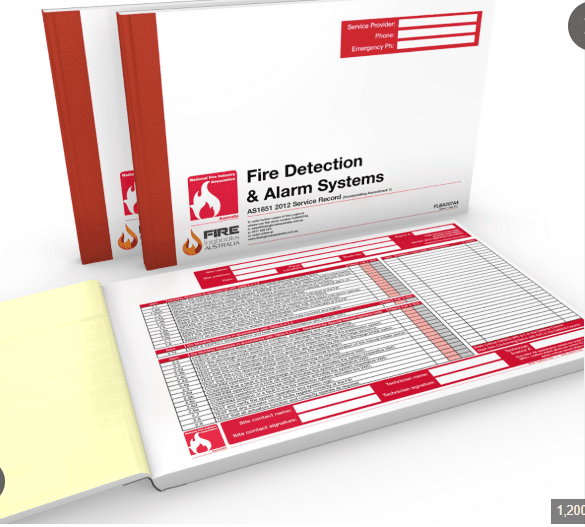
Every year, thousands of commercial buildings across Australia undergo comprehensive fire protection inspections to confirm their life safety systems still work exactly as designed. Whether it’s an office tower in Sydney, a hospital in Melbourne, a warehouse in Brisbane or a shopping centre in Perth, fire systems are only effective if they are routinely inspected, tested and maintained. Installing a fire system doesn’t guarantee ongoing protection, because every component is mechanical or electronic equipment that deteriorates over time. Batteries age, detectors accumulate dust, sprinkler valves seize, emergency lights lose capacity and software drifts out of date. Without routine maintenance, those failures stay hidden until an actual emergency.
That’s why Australia relies on AS 1851: Routine Service of Fire Protection Systems and Equipment. The annual inspection is the most comprehensive service in the maintenance lifecycle: unlike monthly visual checks or six-monthly operational tests, it involves detailed functional testing of numerous interconnected systems to prove the whole life safety strategy still performs. This guide covers what annual fire testing involves, why it’s required, which systems are tested, how a competent technician works through a building, the defects that turn up most often, and the records that prove it was done.
What is annual fire system testing?
Annual fire system testing is a comprehensive inspection and functional assessment of installed fire protection systems, to confirm they still operate in line with their original design, the manufacturer’s specifications and AS 1851. It’s preventative maintenance, not emergency repair. The point isn’t just to find broken equipment, it’s to identify deterioration before something fails during a fire. A single annual inspection may test hundreds or thousands of individual assets, including:
- Smoke, heat and aspirating smoke detectors
- Manual call points and fire indicator panels
- Occupant warning and EWIS systems
- Emergency lighting and exit signs
- Sprinklers, hydrants, hose reels and extinguishers
- Smoke control systems, fire doors and fire dampers
- Battery systems, interface controls and cause-and-effect programming
- Building management system interfaces
Large hospitals, universities and high-rise buildings can contain tens of thousands of individual assets, which is why annual testing is far more involved than a simple “service visit.”
Why annual testing is critical
Fire protection systems spend almost their entire life waiting for a single event that may never come. Unlike air conditioning or lighting, they’re designed to stay inactive until an emergency, so hidden faults can develop over months or years with nobody noticing. Corrosion inside sprinkler pipework, contaminated detectors, failing batteries, damaged wiring, seized valves, faulty pressure switches, network communication failures, obstructed hydrants: during an emergency, seemingly minor defects like these can cause catastrophic failures. Annual testing systematically finds those developing faults before they compromise occupant safety.
The purpose of AS 1851
AS 1851 provides nationally recognised maintenance procedures for virtually every fire protection system installed in Australian buildings. Rather than installation requirements, it focuses on maintaining systems throughout their operational life, specifying inspection frequencies, testing methods, functional verification, documentation, defect classifications, maintenance records, reporting and equipment restoration. That consistency means contractors across Australia service systems using recognised industry practices, and gives building owners confidence the work follows an accepted framework. (For the fundamentals of the standard itself, see our guide to AS 1851 routine servicing.)
Is annual fire testing mandatory?
The honest answer is “it depends.” AS 1851 is generally a voluntary Australian Standard unless it’s adopted by legislation or a contractual requirement, but in practice many jurisdictions, building approvals, insurance policies, fire safety schedules and maintenance agreements require systems to be maintained to AS 1851. That means annual inspections are commonly expected for commercial, industrial, healthcare, education, aged care, hospitality, retail and many multi-residential buildings. Failing to maintain fire systems can lead to:
- Increased risk to building occupants
- Insurance claim disputes or reduced coverage where maintenance obligations weren’t met
- Regulatory action where maintenance is required by legislation or approvals
- More equipment failures and higher long-term maintenance costs
- Difficulty demonstrating due diligence after a fire or incident
Always confirm the specific obligations that apply in your state or territory and to your building classification.
Who is responsible?
Many people assume the fire contractor is legally responsible for compliance. In reality, responsibility is shared:
- Building owners ultimately remain responsible for ensuring systems are maintained: engaging qualified contractors, ensuring inspections happen on time, rectifying defects, keeping records and funding repairs. Ignoring identified defects does not transfer responsibility to the contractor.
- Fire protection contractors are responsible for performing inspections correctly, following AS 1851 where applicable, identifying and recording defects accurately, providing maintenance reports, advising clients of non-compliant equipment, reinstating systems after testing and keeping test equipment calibrated.
- Facility managers bridge the two, coordinating access and isolations, informing occupants, reviewing reports, scheduling repairs and tracking outstanding defects.
Fire protection systems included in an annual inspection
Annual testing is far more than activating a few smoke detectors. A smoke detector may identify the fire, but it’s the fire indicator panel that interprets the signal and then activates occupant warning, recalls lifts, releases door holders, starts smoke exhaust fans, opens relief dampers, signals the monitoring centre and controls suppression. Because these systems work together, annual testing must verify not just that each component works, but that the entire fire strategy performs as intended.
Fire indicator panels (FIP)
The FIP is the brain of the system: every detector, call point, flow switch and interface reports back to it. Annual testing confirms it operates as designed: checks for physical damage, software and firmware integrity, indicators and display, power supply and charger, battery condition, earth-fault monitoring, zone operation, input/output and relay verification, brigade interface, network communication, history log and time synchronisation. Technicians also confirm the programmed cause-and-effect logic is still accurate, because years of building alterations and software changes create discrepancies that only surface during detailed functional testing. Common defects: failed standby batteries, chargers not holding voltage, earth faults, open or short circuits, faulty relays, incorrect labelling and programming inconsistencies.
Smoke and heat detectors
Detectors are physically inspected, cleaned, assessed for contamination and functionally tested, confirming each reports the correct address to the panel and triggers the right alarm sequence. Over time smoke detectors are contaminated by dust, construction debris, paint, insects and moisture, which can make them less sensitive, overly sensitive, slow to respond or prone to nuisance alarms. Heat detectors are used where smoke detectors would nuisance-alarm (kitchens, plant rooms, workshops and car parks) and require specialised heat testing equipment rather than aerosol smoke.
Aspirating smoke detection (ASD)
ASD systems continuously draw air samples through a pipe network and analyse them with highly sensitive laser detection chambers, detecting smoke long before conventional detectors, so they protect data centres, telecommunications rooms, clean rooms, archives and other critical facilities. Annual testing is far more involved: airflow levels, pipe integrity, sampling-point operation, transport times, each alarm threshold (Alert, Action, Fire 1, Fire 2), detector contamination, filter condition, fan operation, network communications and battery backup. Common defects include blocked sampling holes, broken pipework, air leaks, dirty filters, contaminated chambers and incorrect airflow calibration.
Manual call points and EWIS
Manual call points (break-glass units) are checked for physical condition, accessibility, signage, alarm activation, reset and correct address reporting. Emergency Warning and Intercommunication Systems (EWIS) coordinate evacuation with alert and evacuation tones, live paging, warden intercom points and zone-based messaging. Annual testing covers speakers, amplifiers, warden intercoms, microphones, batteries, tone generators, message playback, zone switching and fault monitoring. Large buildings can have hundreds of speakers to verify.
Sprinklers, hydrants, hose reels and extinguishers
Contrary to popular belief, sprinkler heads operate independently: a fire doesn’t set off every head at once. Annual sprinkler testing covers valve inspections, water flow and pressure, alarm and flow switches, supervisory switches, pump interfaces, pipework and head condition. Hydrant inspections verify accessibility, valve operation, flow rates, pressure and couplings; hose reels cover hose and nozzle condition, water flow, drum rotation and valves; extinguisher servicing confirms the correct type, pressure, tamper seal, weight, corrosion, labels and service tags. Common defects: painted or corroded sprinkler heads, closed or seized valves, low pressure, damaged hydrant couplings and split hoses.
Emergency lighting and exit signs
During a power failure caused by fire, emergency lighting guides occupants out. Annual duration testing confirms battery capacity, charger operation, light output, automatic changeover and that each luminaire maintains illumination for the required duration. Reduced battery capacity is one of the most common annual findings. Many fittings look fine until the duration test is run.
Passive fire and smoke control
Passive fire protection (fire doors, dampers, walls, collars and penetration seals) doesn’t detect or suppress fire but slows its spread, and often produces the highest number of defects (damaged seals, missing self-closers, door misalignment, unsealed cable penetrations). Smoke hazard management systems (exhaust fans, stair pressurisation, spill fans, automatic dampers and air-handling shutdown) control smoke movement and are tested to confirm each component responds correctly during a fire alarm sequence.
Cause-and-effect testing
One of the most important, and most overlooked, parts of an annual inspection is cause-and-effect testing. Rather than checking a single device in isolation, technicians verify that every programmed response happens in the right order when a fire event is initiated: a detector activates, the FIP identifies the location, occupant warning enters the alert phase, lifts recall to the designated floor, magnetic door holders release, smoke exhaust starts while non-essential air conditioning shuts down, stair pressurisation activates, brigade monitoring signals transmit, and every event is logged. Even if each component passes its own test, a failure in this sequence can undermine the whole fire safety strategy.
The annual fire testing process, step by step
Testing one component often causes many others to operate automatically. Activating a single smoke detector can recall lifts, shut down air conditioning, start smoke fans, release fire doors and notify the monitoring centre. Without careful planning, that disrupts the building or triggers an unwanted brigade response. So every annual inspection follows a structured workflow:
- Review the site history: previous annual, six-monthly and monthly reports, outstanding defects, false alarms, brigade call-outs and recent building modifications, to focus attention on recurring problems.
- Review building documentation: fire system drawings, zone block plans, the cause-and-effect matrix, detector and sprinkler layouts, EWIS zoning and interface schedules. Testing against outdated drawings leads to wrong conclusions and missed devices.
- Site arrival and safety briefing: confirm scope, access, high-risk and restricted areas, working at heights, confined spaces, isolation procedures and emergency contacts.
- Notify occupants of the date, expected duration, areas affected, possible alarm tones and interruptions, so testing doesn’t cause unnecessary concern or a false emergency response.
- Notify the monitoring centre: place the monitored system into test mode with the alarm signalling provider and record the operator reference. Skip this and every activated detector may be treated as a genuine fire.
- System isolation: temporarily isolate lift recall, smoke exhaust, air-conditioning shutdown, suppression and door-release interfaces as needed. Every isolation is documented and must be removed before leaving.
- Visual inspection: before activating anything, inspect panels, detectors, sprinklers, fire doors and hose reels for damage, contamination, corrosion, obstructions and missing labels. Many defects are found before any functional testing.
- Functional device testing: activate each device and confirm it generates the correct alarm, reports the correct address and location text, operates its programmed outputs, resets and logs the event. In large buildings this can mean thousands of detectors.
- Test networked systems: verify panel communication, network redundancy, fibre and copper loops, fault reporting and time synchronisation across multiple networked panels.
- Cause-and-effect verification: confirm every programmed building response operates exactly as documented in the approved fire engineering design.
- Test emergency power supplies: check charger voltage, battery capacity, internal resistance and load performance. Many batteries look healthy until load testing exposes deterioration.
- Emergency lighting duration testing: confirm each fitting maintains illumination for the required period after loss of mains power.
- Defect identification and classification: assess each finding by its impact on system performance and classify it accordingly, with enough detail (and photos) for the owner to understand the risk and act.
- Record every test. If a test isn’t recorded, there’s often no evidence it was done. Capture assets tested, pass/fail results, measurements, defects, monitoring references and technician details.
- Restore the building to normal operation: remove all isolations, re-enable monitoring, reset panels, clear temporary faults and verify the building is fully protected. A building should never be left with an unintentionally impaired system.
- Present the findings: deliver a clear maintenance report explaining systems inspected, work completed, defects, recommended corrective actions and equipment nearing end of life.
Common defects found during annual inspections
The biggest benefit of annual testing isn’t proving compliance. It’s finding problems before they become life-threatening failures. Technicians identify thousands of defects across Australia each year, many of which developed gradually and would have stayed hidden until a real emergency. The most common:
- Smoke detector contamination: dust, paint overspray, diesel exhaust, cooking residue and insects reduce sensitivity or cause nuisance alarms; a detector that activates even a minute late lets fire and smoke spread further.
- Failed standby batteries: a battery can look healthy on its charger, then collapse the moment mains power is lost, taking panels, alarms or emergency lighting down with it. Only load testing reveals it.
- Fire panel faults: ageing power supplies, failing relays, corroded terminals, earth faults and communication faults that develop gradually and go unnoticed until another fault appears.
- Sprinkler defects: painted heads (which must be replaced, never cleaned or repainted), corrosion, obstructions, and closed, seized or leaking valves. A system can’t operate if water can’t reach the heads, so valve position is a top-priority check.
- Hydrant and hose reel defects: damaged couplings, leaking valves, low flow, blocked access, split hoses and seized drums.
- Emergency lighting and exit sign failures: battery deterioration, failed lamps and LEDs, damaged diffusers and incorrect directional arrows.
- ASD, manual call point and passive fire defects: blocked sampling points and dirty filters; broken glass and damaged covers; damaged smoke seals, missing intumescent strips and doors that won’t self-close.
- Fire damper, smoke control and network faults: seized damper blades, failed actuators, fan and motor faults, control-wiring issues, fibre and loop failures and cause-and-effect programming errors that only functional testing exposes.
- Asset identification and documentation gaps: missing barcodes, duplicate asset numbers, incorrect addresses and incomplete records that make every future inspection slower and less accurate.
Documentation is half the job
A high-quality annual record captures the date and time, site and technician details, every asset tested, pass/fail results, measurements and readings, defects identified with recommended corrective actions, photographic evidence, cause-and-effect verification, battery and water-pressure results, monitoring reference numbers and signatures. Accurate records support future maintenance, assist audits, and provide a valuable history of each asset across its service life, and they’re what demonstrates the owner is actively managing their fire safety responsibilities. In NSW, this maintenance is also what underpins the building’s Annual Fire Safety Statement (see our AFSS guide).
Why digital inspection workflows are becoming the standard
Paper-based inspection has served the industry for decades but is being replaced by digital workflows. Instead of carrying folders of printed asset lists and re-transcribing handwritten notes back at the office, technicians complete inspections in real time on a mobile device, scanning QR-coded assets, recording results instantly, capturing photo and video evidence, creating defects on the spot, generating compliance reports automatically and giving clients secure online access to their records. Annual testing is no longer just about proving compliance; it’s about building a complete digital history of every life safety asset in a building, which underpins asset-lifecycle management: budgeting for planned replacement years ahead instead of waiting for equipment to fail.
Frequently asked questions
Who can perform annual fire inspections?
Annual inspections should be carried out by competent technicians with the appropriate training, experience and knowledge of the systems being serviced. Check the licensing and accreditation rules in your state or territory.
How long does an annual inspection take?
It depends on building size and complexity. A small commercial building may take several hours; hospitals, airports and large campuses may need multiple technicians over several days.
Why is annual testing more extensive than monthly inspections?
Monthly inspections focus on visual checks and basic operational verification. Annual inspections involve comprehensive functional testing of interconnected systems, detailed measurements, battery testing, interface verification, cause-and-effect testing and full documentation.
What happens if defects are identified?
Defects should be documented, prioritised and communicated to the building owner, who then arranges corrective action to restore the affected equipment to its intended operating condition.
Can annual inspections be completed outside business hours?
Yes. Many organisations schedule inspections after hours or on weekends to minimise disruption to occupants and operations.
What records should building owners retain?
Inspection reports, maintenance records, asset registers, certificates, defect histories and commissioning information: anything demonstrating the maintenance program has been carried out as required.