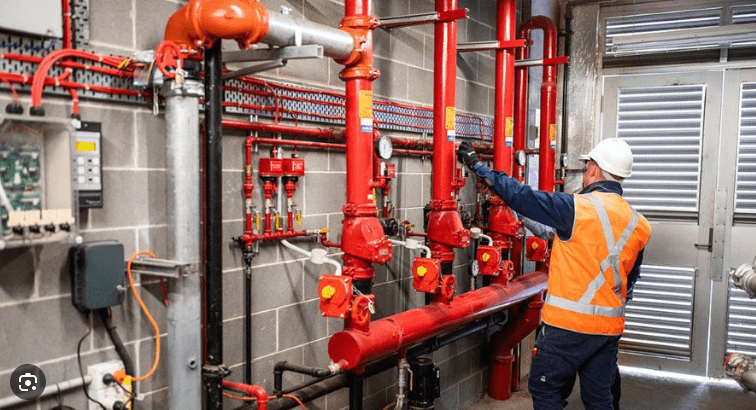
If you own or manage a commercial or multi-residential building in NSW, the Annual Fire Safety Statement (AFSS) is one compliance task you can’t let slip. It’s a legal obligation, it falls on the building owner, and missing it can mean penalty notices, daily fines and a building that isn’t certified safe. The good news is that an AFSS is very manageable once you understand what it is, who has to do what, and the deadlines that drive it. Here’s the complete, plain-English guide.
What is an Annual Fire Safety Statement?
An Annual Fire Safety Statement is a document, signed on behalf of the building owner, that certifies each essential fire safety measure in the building has been inspected and assessed by a suitably qualified person and is capable of performing to the standard required in the building’s fire safety schedule. In plain terms: it’s the owner’s yearly declaration that the building’s fire safety systems (alarms, sprinklers, hydrants, exit lighting, fire doors and the rest) have been checked and still work the way they’re supposed to.
It is not a maintenance report and it is not optional paperwork. It is the formal, recurring proof that a building’s fire safety measures are being kept in working order, and it has to be lodged with the authorities and displayed in the building every year.
The legislation behind it (NSW)
In NSW, the AFSS is governed by the Environmental Planning and Assessment (Development Certification and Fire Safety) Regulation 2021 (Part 9), which carried over and updated the fire safety provisions from the former 2000 Regulation. The form itself is the statement approved by the Planning Secretary, and you must use the current approved form, not a home-made version. The measures the statement covers come from the building’s fire safety schedule, the document (usually attached to the development consent or a fire safety order) that lists every essential fire safety measure required for that building and the standard each must perform to.
Who needs to issue an AFSS?
The duty sits squarely with the owner of the building. If you’re a strata owners corporation, a commercial landlord, a facilities manager acting for an owner, or a body corporate, the statement is your responsibility. You can engage fire contractors to do the inspections and assessments, but the legal obligation to issue, lodge and display the statement stays with the owner.
An AFSS is required for buildings that have a fire safety schedule. Broadly, that’s most buildings other than:
- Class 1a buildings: ordinary houses and the like.
- Class 10 buildings: non-habitable structures such as sheds, carports and fences.
That means almost all commercial, retail, industrial and multi-unit residential (apartment) buildings need one. If you’re not sure whether your building has a fire safety schedule, your council holds a copy and it’s the first thing to track down.
What the statement actually certifies
The AFSS certifies that each essential fire safety measure (EFSM) listed in the fire safety schedule has been assessed by a competent fire safety practitioner and is capable of performing to the standard in the schedule. Essential fire safety measures vary building to building, but commonly include:
- Automatic fire sprinkler systems and fire pumps
- Fire hydrant systems and fire hose reels
- Automatic fire detection and alarm systems
- Emergency lighting and exit signs
- Fire doors, fire shutters and fire/smoke dampers
- Portable fire extinguishers and fire blankets
- Mechanical air handling and smoke control systems
- Paths of travel to exits and the exits themselves
- Warning and intercommunication (EWIS) systems
The 90-day assessment rule
This is the deadline that catches owners out. Each fire safety measure must be inspected and assessed within the 90 days immediately before the date the statement is issued. An assessment done four or five months ago is too old: by the time you lodge, it has to be fresh. In practice this means you can’t leave everything to the last week, but you also can’t get the work done far in advance and sit on it. The statement is then due within 12 months of the date of the previous statement (or, for a brand-new building, within 12 months of the final occupation certificate or fire safety certificate).
Who can assess and sign? Accredited practitioners
The assessment must be carried out by a competent fire safety practitioner. For certain measures, NSW requires an Accredited Practitioner (Fire Safety), an “APFS” accredited under the Fire Protection Accreditation Scheme (FPAS) run by the Fire Protection Association Australia (FPA Australia). The accreditation classes line up with measure types (for example, fire detection and alarm systems, or mechanical services), so the right class of practitioner has to assess each measure.
A few things that follow from this:
- Check the practitioner’s accreditation is current and covers the measures they’re assessing. An expired or wrong-class accreditation can invalidate the assessment.
- The owner (or their authorised agent) signs the statement itself; the practitioner provides the assessment that the statement relies on.
- Keep the assessment records, as councils and Fire and Rescue NSW can ask to see them.
Annual vs supplementary statements (critical measures)
Most buildings issue one Annual Fire Safety Statement covering all measures each year. But a fire safety schedule can flag certain measures as critical fire safety measures that need assessing more often than annually, in which case you issue a Supplementary Fire Safety Statement for those measures at the more frequent interval set out in the schedule. If your schedule lists critical measures, build their extra assessments into your calendar so they’re never overdue.
What you must do with the statement
Issuing the statement isn’t the end of it. Once it’s signed, the owner must, as soon as practicable:
- Give a copy to the local council.
- Give a copy to the Commissioner of Fire and Rescue NSW.
- Display a copy prominently in the building (typically near the main entrance or in a common area) so occupants and inspectors can see it.
Keep your own copy and the supporting assessments on file too. The displayed statement is the visible sign that the building is current; an out-of-date one on the wall is an easy red flag for an inspector.
What happens if you’re late or miss it
Failing to issue, lodge or display an AFSS on time is an offence, and councils take it seriously because it’s a public-safety obligation. The consequences can include:
- Penalty (infringement) notices issued by the council.
- Continuing daily penalties for as long as the statement remains outstanding, so the cost compounds the longer you leave it.
- Higher maximum penalties if the matter is dealt with in court.
- Fire and Rescue NSW inspections and council fire safety orders requiring rectification.
- Practical fallout: insurance complications, problems at sale or lease, and liability exposure if there’s ever a fire.
Because the fines accrue daily, a late statement is one of the cheapest problems to fix early and one of the most expensive to ignore.
Step by step: how to get your AFSS done
- Find your fire safety schedule. It lists every measure and the standard each must meet. Your council holds a copy if you can’t locate it.
- Note your due date (12 months from the last statement) and work backwards so assessments land inside the 90-day window.
- Engage a fire protection company and the right accredited practitioners for the measures in your schedule.
- Have each measure inspected, tested and serviced (routine servicing is done to AS 1851) so it can pass assessment.
- Rectify any defects found: a measure that can’t perform to its standard can’t be certified, so fix it before assessment.
- Have each measure assessed by a competent/accredited practitioner within 90 days of issuing.
- Complete the current approved statement form and sign it as the owner (or authorised agent).
- Lodge it with the council and Fire and Rescue NSW, and display a copy in the building.
Common reasons an AFSS gets held up
- Assessments done too early, so they fall outside the 90-day window by the time the statement is issued.
- Unresolved defects: a measure can’t be certified until it actually performs to standard.
- A practitioner whose accreditation has lapsed or doesn’t cover the measure they assessed.
- A missing or out-of-date fire safety schedule, so it’s unclear what has to be certified.
- Measures added or changed in the building that aren’t reflected on the schedule.
- Leaving it to the last minute and not allowing time to rectify and re-test.
How the AFSS relates to AS 1851
The two go hand in hand but aren’t the same thing. AS 1851 is the Australian Standard for the routine service of fire protection systems: the inspecting, testing and maintenance that keeps the equipment working through the year. The AFSS is the annual legal statement that certifies those measures are capable of performing to standard. Good AS 1851 servicing records throughout the year are exactly what makes the annual assessment and statement straightforward. (See our guide to AS 1851 routine servicing for the detail.)
What about other states?
“Annual Fire Safety Statement” is the NSW term, but every state and territory has its own fire safety maintenance and reporting regime. The principle (keep the measures working and prove it) is the same, but the paperwork and the names differ:
- Victoria: building owners maintain Essential Safety Measures (ESMs) and prepare an Annual Essential Safety Measures Report (AESMR) under the Building Regulations.
- Queensland: owners/occupiers have maintenance and record obligations under the Building Fire Safety Regulation, with extra requirements for budget accommodation buildings.
- Other states and territories: broadly similar maintenance and certification duties under local building and fire legislation.
Wherever your building is, check the requirements with your state regulator and local council, as the wording, forms and deadlines are set locally.