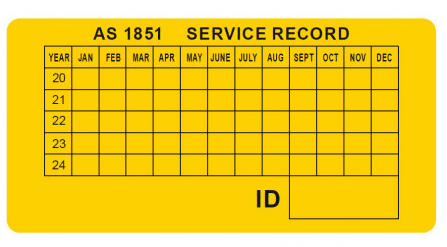
If you work in fire protection, AS 1851 is the standard your work is measured against. Here’s what it actually covers, in plain English.
What is AS 1851?
AS 1851 is the Australian Standard for the routine service of fire protection systems and equipment. It sets out how to inspect, test and maintain fire systems so they keep performing to the standard they were designed and installed to. The current edition is AS 1851-2012.
What it covers
It spans the main fire protection systems: sprinklers, fire pumps, hydrants and hose reels, detection and alarm systems, portable extinguishers and blankets, special-hazard suppression, and passive fire measures. (Emergency and exit lighting is a separate standard, AS/NZS 2293.)
Servicing happens at set frequencies, and they vary by equipment
AS 1851 prescribes routine service at fixed intervals (monthly, six-monthly, yearly and longer) but there is no single schedule for everything. Each type of equipment has its own. Fire pumps, for example, are tested monthly, with further six-monthly, yearly and five-yearly activities, while extinguishers are typically inspected six-monthly, serviced yearly and pressure-tested every five years. Always work to the schedule for the specific equipment.
Baseline data and record-keeping
Service results are checked against “baseline data”, the reference parameters from the system’s approved design. A logbook is kept on site, and records generally need to be retained (commonly for seven years) and available for inspection. Responsibility for keeping them sits with the building owner.
Who can do the servicing
Routine service must be done by a competent person. Licensing varies by state: in NSW, FPAS accreditation is required for fire safety design, certification and assessment rather than for routine servicing itself, while Queensland requires QBCC fire protection licensing to do the work. Check the rules in your state.
AS 1851, the AFSS and your obligations
AS 1851 has legal force when state law calls it up. In NSW, for example, it becomes mandatory for the routine servicing of essential fire safety measures from 13 February 2026. Separately, NSW building owners must issue an Annual Fire Safety Statement (AFSS) each year, confirming an accredited practitioner has assessed the building’s essential fire safety measures. Other states use different regimes (Victoria’s Essential Safety Measures, for instance), so check what applies where you work.