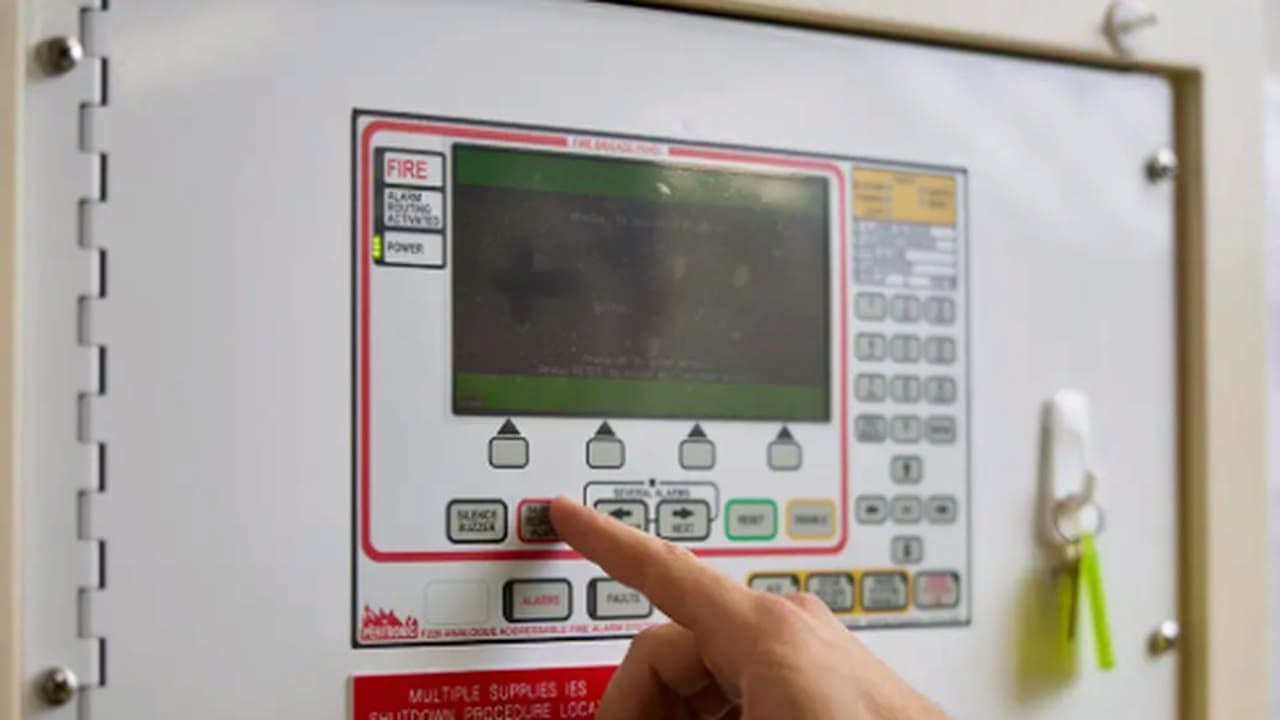
Every fire contractor has a handful of sites where the panel is quietly running out of road. It still passes its monthly test. It still talks to the brigade. But the last loop card took six weeks to source, the programming software only runs on one old laptop in the office, and the technician who knows its quirks is the only one who will go near it. Nothing is broken today, and that is exactly why nobody has planned for the day something is.
Telling a client their fire indicator panel is at end of life is one of the most valuable things you can do for them, and one of the easiest to get wrong. Raise it too late and you are explaining an unplanned outage. Raise it badly and it reads as a sales pitch from the contractor who happens to sell panels. This guide covers what end of life actually means for a panel, the Australian standards context, how to document the evidence, how to raise it in the service report, the upgrade options, what goes into the quote, and how to have the budget conversation with strata and owners.
What end of life means for a fire indicator panel
A panel does not have an expiry date stamped on it. End of life is the point where the panel can no longer be reliably maintained, repaired or modified, and where the risk of an extended outage is high enough that the owner should be planning a replacement rather than waiting for a failure. It is a judgement, and it is built from several separate signals rather than any single one.
Manufacturer discontinuation and end of support
Manufacturers typically move a panel through stages: current, discontinued (no longer sold new, but supported), and then end of support, where spare parts, repairs and technical assistance are no longer guaranteed. A discontinued panel is not automatically a problem. A panel past end of support is a panel you are maintaining on borrowed parts. Ask your supplier for the status of each panel model in your contract base in writing, because a dated notice from the manufacturer or distributor is the strongest single piece of evidence you can put in front of an owner.
Spare parts availability
Watch lead times on the parts that actually fail: loop cards, power supply modules, display and keypad assemblies, relay and output boards, network cards and the main processor board. When a part goes from stock to back order, then to refurbished only, then to whatever can be found on another site being decommissioned, the panel is telling you its future. Record every part you could not get, how long you waited, and where it finally came from.
Detector protocols and loop compatibility
Addressable panels speak a protocol to their field devices. Older protocols are often tied to detector and module ranges that are themselves discontinued, so the issue is not only the panel but whether you can still buy a compatible detector when one fails, or when a tenant fitout needs ten more. A panel whose detectors can no longer be sourced new is in practical terms at end of life, even if the panel itself is fine, because every fitout becomes a workaround.
Configuration software and firmware
Many panels need proprietary software to change the programming, back up the configuration or update firmware. When that software only runs on an unsupported operating system, needs a serial interface nothing modern has, or depends on a licence nobody can renew, the panel has become very hard to modify safely. Losing the ability to back up and restore the configuration is a serious risk on its own: a processor failure without a usable backup means reprogramming the whole site from paper records, if they exist.
Recurring faults, batteries and power supply
- Intermittent earth faults, loop faults or communication faults that clear and return, with no field cause found after reasonable investigation.
- Network faults between panels or to repeaters that have become routine enough that occupants ignore them.
- Batteries that fail capacity testing earlier than they should, which can point to a charger or power supply that is no longer regulating properly.
- Power supply modules running hot, ripple or charging faults, and a battery standby calculation that no longer works because loads have grown since installation.
- Displays fading, keypads failing and indicators that no longer light, which matter more than they look because they are how the brigade reads the panel.
Compatibility with current devices and interfaces
Newer buildings expect panels to interface cleanly with occupant warning, smoke control, access control and building management. An old panel may only manage those interfaces through a stack of relays and interposing modules added over the years, each one a point of failure and a gap in the records. When adding a simple ancillary output needs a site visit, a custom bracket and a prayer, compatibility has become the problem.
The Australian standards context
Fire detection and alarm systems are designed, installed and commissioned to AS 1670.1. It requires the components of the system to comply with the appropriate product standards, and for the fire detection control and indicating equipment (the panel) that means AS 7240.2, with the fire brigade panel interface covered by AS 4428.3. Routine service of the installed system then falls under AS 1851. Editions matter: AS 1670.1 is now at a 2024 edition, AS 7240.2 at a 2026 edition and AS 4428.3 at a 2020 edition, and the edition that applies to a particular building depends on the National Construction Code version and the approvals that applied when the work was done. Confirm the edition with the certifier or designer for the project rather than assuming.
Three practical consequences follow for an end of life panel:
- A true like-for-like replacement often does not exist. The model installed may not be made any more, and its successor may be listed to a newer product standard, use a different loop protocol and present a different brigade interface.
- Replacing a panel is generally treated as more than maintenance. Depending on the state or territory and the building, it may need a building certifier or surveyor to be engaged, a design or performance statement, updated block plans and documentation, and fresh certification of the system. Requirements differ between jurisdictions, so confirm the pathway with the certifier and the relevant authority before you price it.
- The brigade connection is part of the job. Alarm signalling equipment, monitoring provider arrangements and any brigade requirements for panel location and presentation need to be checked and coordinated, not discovered on changeover day.
Building the evidence across services
The strongest end of life case is not an opinion offered on one visit. It is a record that builds over a year or two of routine service, so that when you raise it the owner can see the pattern for themselves. Start recording as soon as a panel shows the first signs, and keep it factual.
| Evidence | What to record | Why it persuades |
|---|---|---|
| Manufacturer status | Discontinuation or end of support notice, with date and source | Independent of the contractor, so it cannot be read as a sales pitch |
| Parts history | Part number, date requested, lead time, new or refurbished | Shows the repair risk getting worse over time |
| Fault log | Recurring fault types, dates, investigation done, outcome | Turns occasional nuisance into a visible trend |
| Detector availability | Which device types can no longer be bought new | Links the panel to fitout and repair costs the owner will feel |
| Software and backups | Software version, operating system needed, date of last configuration backup | Exposes the risk of an unrecoverable processor failure |
| Power and batteries | Battery test results, charger readings, standby calculation status | Shows a measurable decline rather than an impression |
| Interfaces | Ancillary outputs, interposing relays and undocumented modifications | Explains why changes are slow and costly |
| Photographs | Panel internals, labels, modifications and damage | Lets a strata committee see what you see |
Record it against the panel as an asset, not in a technician’s head or a separate spreadsheet. When the panel history sits with the asset, anyone in your business can produce the evidence, and the evidence survives a change of technician or a change of contractor.
Raising it in the service report without a sales pitch
Owners and strata managers are used to contractors finding work. The way to be taken seriously is to write the end of life note as risk advice, not as an offer. Keep it separate from the defect list where possible, keep it short, and give the owner what they need to make a decision.
- State the finding plainly: the panel model, its support status, and the evidence that supports the assessment.
- Explain the risk in operational terms: what happens if a critical part fails, how long the system could be impaired, and what interim measures that would mean for occupants.
- Give a timeframe, not an ultimatum: recommend planning a replacement within a period, for example over the next one to three budget cycles, and say what would shorten it.
- Outline the options at a high level and offer to survey and quote, without putting a price in the service report itself.
- Note what you will keep doing in the meantime: securing critical spares where possible, taking configuration backups, and reporting any change in condition.
A useful test: if the owner forwarded your note to another contractor, would it still read as fair? If the answer is yes, it is risk advice. If it reads as a quote in disguise, rewrite it.
The upgrade options
There is rarely one right answer. The options below suit different buildings, budgets and states of the field wiring, and giving the owner a genuine choice is part of what makes the advice credible.
| Option | When it fits | Watch for |
|---|---|---|
| Like-for-like swap | The manufacturer still supplies a compatible replacement or successor that runs the existing loop protocol and devices | Confirm genuine compatibility in writing; it may still need certification and recommissioning |
| New panel, retain compatible field devices | Field wiring and detectors are in good condition and supported by the new panel, directly or through a protocol interface | Detector age and condition, cable integrity, loop loading and whether the retained devices remain supported |
| Full system upgrade | Detectors and cabling are also at end of life, or the building has changed use or layout significantly | Highest cost and disruption; more likely to bring current requirements into play across the whole system |
| Staged upgrade | Large or multi-building sites, networked panels, or budgets spread across several years | Interim compatibility between old and new, a clear staging plan and documentation at every stage |
On campuses, multi-building strata schemes and large commercial sites, staging by building, by panel or by loop is often the only realistic path. The risk is the interim period, when old and new equipment run side by side. The staging plan needs to show how the network, the brigade interface and the cause and effect will work at every stage, not only at the end.
What goes into the quote
Panel replacements are underquoted far more often than they are overquoted, because the panel is the visible part and most of the cost is not. Build the quote from a survey, not from a price list, and itemise it so the owner can see where the money goes.
| Item | What it covers |
|---|---|
| Site survey | Existing panel, loops, device counts and types, cabling, power, battery calculation, interfaces and the as-installed documentation |
| Design and compatibility checks | Device compatibility, loop loading, protocol interfaces, battery standby, network design and any certifier or designer input required |
| Equipment | Panel, loop cards, power supplies, batteries, network and repeater equipment, interface modules and enclosures |
| Programming | Rebuilding or migrating the configuration, zone and device text, and the cause and effect matrix |
| Ancillary interfaces | AHU and smoke control shutdown, lift recall, door release and access control, EWIS interface, sprinkler and suppression inputs, and brigade signalling |
| Brigade and monitoring | Alarm signalling equipment coordination, monitoring provider changeover and any brigade requirements |
| Isolation and temporary measures | Planned isolations, fire watch or other interim arrangements agreed with the owner, and notification of the relevant parties |
| Commissioning | Full functional testing of every device and every output, cause and effect proof, and witness testing where required |
| Documentation | Updated block plans, as-installed drawings, configuration backup, commissioning records and certification |
| After-hours work | Changeovers and interface testing outside trading hours, and any tenant or occupant coordination |
| Disposal | Removal and disposal of the old panel, batteries and redundant equipment |
Cause and effect is where the risk sits
The panel is easy to swap. What it does when it goes into alarm is not. Every AHU shutdown, lift recall, door release, EWIS evacuation signal and brigade output has to be identified, reprogrammed and proven on the new panel. On older sites the cause and effect is often undocumented or only partly documented, so the survey has to reconstruct it from the existing programming and from testing. Price that reconstruction explicitly, because it is the part of the job that blows out.
Isolation and the changeover window
There is always a period when the old panel is out and the new one is not yet fully commissioned. Plan it as carefully as the installation: how long the system will be impaired, what interim measures the owner has agreed to, who has been notified, and how quickly protection is restored if the day goes wrong. Write those arrangements into the quote and the programme so they are agreed before anyone picks up a screwdriver.
Pricing approach: good, better, best
Presenting options rather than a single number does two things. It lets the owner choose a level of investment they can fund, and it shows that you have thought about their building rather than your margin. Keep each option complete and compliant: the difference between them should be scope and longevity, never whether the job is done properly.
- Good: replace the panel, retain compatible field devices and wiring, migrate the existing cause and effect, recommission and document. Lowest cost, with the age of the field devices carried forward as a known future item.
- Better: as above, plus replacement of the oldest or unsupported detectors, rationalisation of interposing relays, and full documentation of the cause and effect. A longer service life and fewer future surprises.
- Best: full system upgrade, new devices and cabling where needed, and a design that allows for future fitouts and expansion. Highest cost, longest life and the lowest maintenance risk.
State what each option leaves unresolved, so the owner is choosing with full information. Include an allowance for latent conditions such as damaged cabling or undocumented interfaces, and say how it will be handled if found. Set a validity period that reflects equipment price movements and lead times.
The budget conversation with strata and owners
For strata schemes in particular, a panel replacement is a capital item that may need to be considered by the committee, planned in a capital works or sinking fund forecast, and approved at a general meeting. That takes time, which is the strongest argument for raising end of life early. A committee given two years’ notice can plan. A committee told during an outage that parts are unobtainable will pay emergency rates and remember who did not warn them.
- Give the strata manager or building manager a short written summary they can put in front of the committee, separate from the technical report.
- Offer an indicative budget range early, clearly marked as indicative, so it can go into the forecast before a full survey is commissioned.
- Explain the cost of doing nothing in practical terms: repair lead times, possible impairment, interim measures and emergency call-outs.
- Where funds are tight, propose staging, and be clear about what risk remains between stages.
- Offer to attend a committee meeting to answer questions. It is often the step that turns a deferred item into an approved one.
Frequently asked questions
Is an old fire indicator panel non-compliant just because it is old?
Not by itself. A panel installed and approved under an earlier standard is generally assessed against the requirements that applied to it, and if it is maintained and performs correctly it can remain in service. Age becomes a problem when the panel can no longer be repaired, supported or relied on, or when changes to the building trigger a requirement to upgrade. Confirm the position for a specific building with the certifier.
How far ahead should we warn the owner?
As early as you have credible evidence. In practice that means raising it when a panel is discontinued or support is ending, and again as parts and software become harder to obtain. One to three years’ notice gives most owners time to budget, approve and schedule the work properly.
Can we keep the existing detectors with a new panel?
Often, yes, if the new panel supports them directly or through a listed interface and the devices themselves are in good condition and still supported. The survey has to confirm compatibility, loop loading and cable integrity. Where the detectors are discontinued too, retaining them only defers the problem.
Does replacing the panel need approval or certification?
Frequently it does, but the requirements vary between states and territories and between building types. A panel replacement is usually treated as more than routine maintenance, and may involve a building certifier or surveyor, updated documentation and certification of the system. Check with the certifier and the relevant authority for the specific site before quoting.
What if the panel fails before the owner approves the upgrade?
Treat it as any other system failure: report it as a critical defect, notify the relevant parties, put agreed interim measures in place and restore protection as quickly as possible, which may mean an emergency replacement at a higher cost. This is the scenario your early written advice is designed to avoid, and the record of that advice protects both you and the owner.
Sources and further reading
- AS 1670.1:2024 Fire detection, warning, control and intercom systems: System design, installation and commissioning, Part 1: Fire, Standards Australia
- AS 7240.2:2026 Fire detection and alarm systems, Part 2: Fire detection control and indicating equipment, Standards Australia
- AS 4428.3:2020 Control and indicating equipment, Part 3: Fire brigade panel, Standards Australia
- AS 1851-2012 Routine service of fire protection systems and equipment, Standards Australia
- Good practice guide for the inspection, testing, maintenance and repair of fire protection systems in NSW buildings, Building Commission NSW (January 2026)