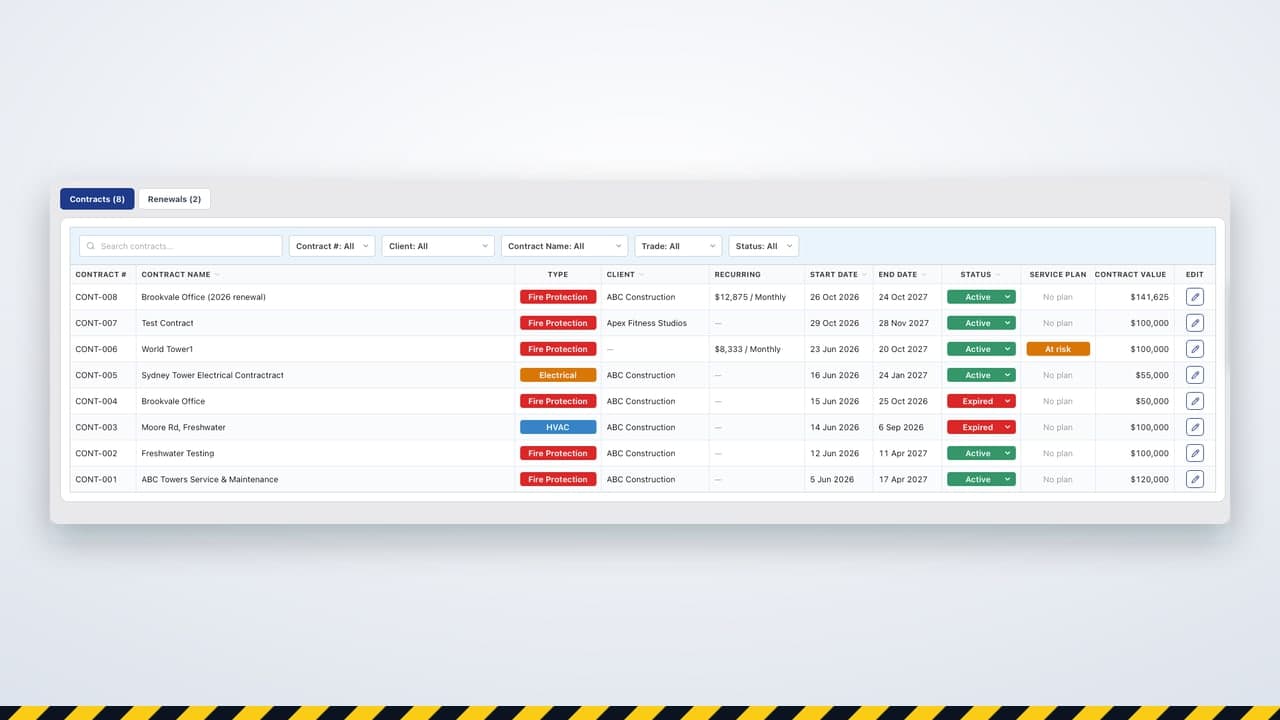
Maintenance contracts are the backbone of a fire protection business: recurring revenue, repeat access to buildings and a steady flow of remedial work. They are also where things quietly go wrong. A visit is missed because nobody booked it, an invoice is not raised, a five-yearly test was never priced in, or the contract lapses because nobody noticed it was due for renewal.
Fire service contract software should carry a contract from the day the client approves it to the day it renews. This guide follows that life cycle.
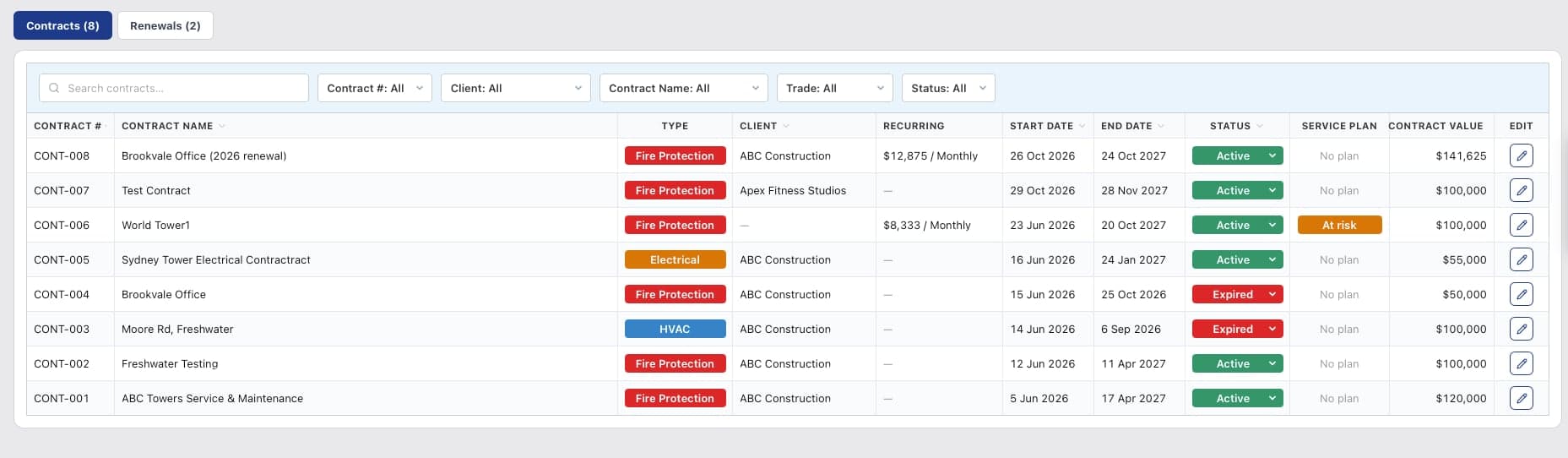
Setting up the contract
A contract starts with the sites, the AS 1851 services at each one, their frequencies, the price and the term. Building it as a quote the client approves means the scope is agreed in writing before work starts. Good software prices the services from the asset register, so the contract matches what is actually in the building.
Planning every visit for the term
When the client approves, every routine visit for the term should be planned: the monthly, six-monthly and yearly services, each in its window. The service plan then shows, at a glance, which visits are booked, which are booked without a technician, which are done and which are slipping. In traqR, approving a service contract quote plans every visit for the term and schedules the invoices.
Invoicing on schedule
Contract invoices should raise themselves on the agreed schedule, monthly, quarterly or annually, rather than relying on someone to remember. Remedial work and callouts on the same contract are billed separately, so the recurring value stays clean.
Catching the work the contract doesn’t cover
Many contracts price the routine monthly to yearly services and leave out the long-interval work: five-yearly extinguisher pressure tests, detector five-yearlies, sprinkler ten-yearly and longer activities. That work still falls due. Software should show it by site with a due date, so it can be quoted before it becomes overdue, rather than discovered at audit.
Defects and statements along the way
Every visit can raise defects, and every defect needs quoting, fixing and checking. The contract should show its open defects and quotes awaiting approval, and, as the annual statement approaches, whether every measure has been maintained and every critical defect cleared.
Renewing on time
A contract that lapses unnoticed is revenue walking out the door. Software should list contracts coming up for renewal at 120, 90, 60 and 30 days, prefill the renewal quote from the current services with any price uplift, and carry the whole asset register across when the client accepts, so the history continues on the new contract.
What to look for
- Contracts built as quotes the client approves, priced from the register.
- Every visit for the term planned on approval, with service plan health at a glance.
- Scheduled contract invoicing, kept separate from remedial work.
- A view of long-interval work the contract doesn’t cover, ready to quote.
- Open defects, quotes and statement readiness on the contract.
- A renewals queue, a prefilled renewal quote and the register carried across.
- Clients who can see their contract, reports and defects in a portal.
Frequently asked questions
What is fire service contract software?
Software that manages recurring fire protection maintenance contracts: the scope and price, the visit schedule for the term, invoicing, defects, annual statements and renewals.
How do I stop missing contract visits?
Plan every visit for the term when the contract is approved, and watch a service plan that shows visits not yet booked or drifting out of their window.
Should five-yearly tests be in the contract price?
Either is fine, as long as it is decided. If they are not included, track them separately and quote them before they fall due.
How far ahead should I start a renewal?
Ninety to a hundred and twenty days gives time to review the price and scope with the client before the term ends.